







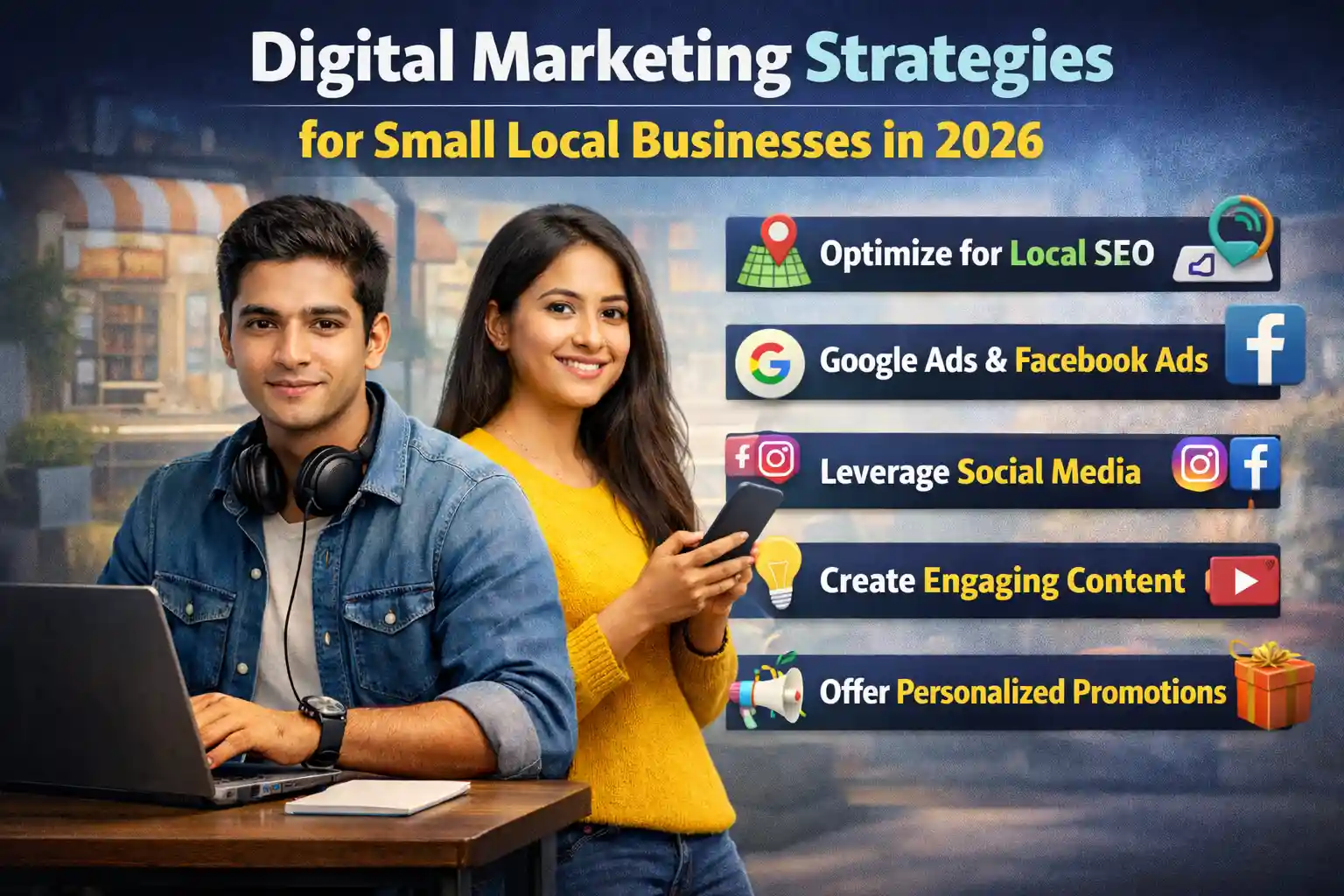

In today’s competitive market, digital marketing is no longer optional for small local businesses it is essential for survival and growth. As we move into 2026, customer behavior, search patterns, and buying decisions have changed significantly. People now look for nearby services, quick solutions, and brands they can trust online. This shift has created new opportunities for small local businesses to compete with larger companies without massive budgets. By using the right digital marketing strategies, local businesses can increase visibility, attract high-intent customers, and build long-term relationships. Understanding how digital marketing works in 2026 is the first step toward sustainable local business growth.
1. Introduction to Digital Marketing for Local Businesses in 2026
2. Understanding Local Customer Behavior and Search Intent
3. Building a Strong Google Business Profile for Local Visibility
4. Local SEO Strategies That Drive Nearby Customers
5. Social Media Marketing for Small Local Brands
6. Content Marketing Ideas for Local Business Growth
7. Using AI Tools to Automate Local Digital Marketing
8. Low-Budget Paid Advertising Strategies for Local Businesses
9. Tracking Performance: Analytics and ROI for Local Marketing
10. Future Digital Marketing Trends Every Local Business Should Prepare For
1. Introduction to Digital Marketing for Local Businesses in 2026
I believe 2026 is a turning point for small local businesses when it comes to digital marketing. Customers no longer search randomly they want fast answers, nearby solutions, and brands they can trust. Digital marketing is no longer just about being online; it’s about being visible at the right moment. As a local business, if I understand how people search, scroll, and decide, I can compete with bigger brands without spending huge budgets. In 2026, digital marketing for local businesses means smart use of local SEO, content, social media, and automation focused on real customers, not vanity metrics.
From my real experience working with small local brands, I’ve seen that businesses who focus on simple digital strategies grow faster than those chasing every new trend. I’ve personally noticed that consistency beats complexity. When I helped a local business optimize their online presence instead of running random ads, their inquiries increased steadily. What worked most was understanding local customer intent and showing up where people were already searching Google, maps, and social platforms.
online business more Detelis click
a small neighborhood café I worked with struggled to attract new customers. Instead of expensive advertising, I focused on improving their local online presence updating their business profile, sharing simple content, and encouraging customer reviews. Within three months, their foot traffic increased because nearby customers could finally find them online. This is exactly why digital marketing in 2026 is a game-changer for small local businesses—it’s practical, affordable, and results-driven when done right.
2. Understanding Local Customer Behavior and Search Intent
I’ve learned that successful digital marketing starts with understanding how local customers think and search. In 2026, people don’t just browse they search with intent. When someone types “best salon near me” or “emergency plumber in my area,” they’re ready to take action. If I understand this local search intent, I can position my business exactly where customers are looking. Local customer behavior is driven by urgency, trust, proximity, and convenience. That’s why digital marketing today is less about traffic volume and more about attracting the right local audience at the right time.
I’ve seen many small businesses fail online simply because they don’t understand what their local customers actually want. I once worked with a service-based business that focused on generic keywords instead of location-based searches. After analyzing customer behavior and updating content with local intent in mind, engagement improved almost immediately. I realized that when I align my marketing message with real customer needs, conversions happen naturally without pushing hard sales.
a local repair service was targeting broad digital marketing terms but getting low-quality leads. I shifted the strategy to focus on location-specific keywords and customer pain points like “same-day service” and “nearby support.” Within weeks, their calls increased because the business was now matching real local search intent. This proves that understanding local customer behavior is one of the most powerful digital marketing strategies for small local businesses in 2026.
3. Building a Strong Google Business Profile for Local Visibility
I’ve realized that in 2026, a Google Business Profile is no longer optional for small local businesses it’s a digital storefront. When people search for services “near me,” this profile often becomes the first impression. If I optimize it properly with accurate information, relevant keywords, photos, and regular updates, I can instantly improve my local visibility. A strong Google Business Profile helps me appear in local search results, Google Maps, and even voice searches. For local digital marketing, this is one of the highest-impact, low-cost strategies available.
I’ve seen that many local businesses create a profile but never fully optimize it. I once worked with a shop that had outdated photos and incomplete details. After I updated their business description, added services, posted weekly updates, and responded to reviews, their visibility improved within weeks. What surprised me most was how quickly customer trust increased just by keeping the profile active and accurate.
a local gym struggled to attract walk-in customers despite having great services. I optimized their Google Business Profile by adding high-quality photos, local keywords, and customer testimonials. Within two months, the gym started ranking higher on Google Maps, and membership inquiries increased significantly. This shows how building a strong Google Business Profile can directly impact local business growth in 2026.
4. Local SEO Strategies That Drive Nearby Customers
I’ve learned that local SEO is the backbone of digital marketing for small local businesses in 2026. When people search for services nearby, they want quick, relevant results and that’s exactly where local SEO helps me win. By optimizing my website with location-based keywords, local content, and structured data, I can attract customers who are already ready to buy. Local SEO isn’t about ranking globally; it’s about dominating my local area. When done right, it brings high-intent traffic that converts better than any generic digital marketing approach.
I’ve seen local SEO outperform paid ads in the long run. I once helped a small service business that relied heavily on ads but struggled with high costs. After focusing on local SEO optimizing service pages, improving site speed, and building local citations their organic leads started growing steadily. What I noticed was that local customers trusted organic results more than ads, which led to higher-quality inquiries.
a local home-cleaning company was invisible online despite offering great service. I optimized their website with “near me” keywords, city-specific pages, and local backlinks. Within a few months, they started appearing on the first page for local searches, and bookings increased significantly. This proves that effective local SEO strategies are one of the most powerful ways to drive nearby customers in 2026.
5. Social Media Marketing for Small Local Brands
I’ve seen that in 2026, social media is not just about posting content it’s about building local relationships. For small local brands, platforms like Facebook, Instagram, and even WhatsApp groups have become digital communities. When I use social media strategically, I’m not trying to go viral worldwide; I’m focusing on staying visible to people in my local area. By sharing behind-the-scenes content, customer stories, and local updates, I can build trust and keep my brand top of mind for nearby customers.
I’ve noticed that local businesses often underestimate the power of consistent social media presence. I once worked with a local shop that posted randomly without a plan. After I helped them focus on local hashtags, location tags, and regular engagement with nearby users, their reach improved naturally. What worked best was responding to comments and messages quickly this simple habit increased customer trust and repeat visits.
a small local bakery struggled to attract younger customers. I suggested posting short videos of daily baking, customer reactions, and local offers on Instagram and Facebook. Within a few weeks, engagement increased, and many customers mentioned they discovered the bakery through social media. This shows how social media marketing can be a powerful growth tool for small local brands in 2026 when used with a local-first mindset.
6. Content Marketing Ideas for Local Business Growth
I’ve learned that content marketing in 2026 is one of the smartest ways for small local businesses to grow without burning money on ads. For me, content is not about writing long blogs just for traffic it’s about answering real local questions. When I create content that helps nearby customers solve problems, I automatically build trust. Local content like FAQs, how-to guides, short videos, and location-based blog posts helps my business show up in search results and stay relevant. Good content works 24/7, bringing customers even when I’m not actively promoting.
I’ve seen local businesses get amazing results from simple content strategies. I once worked with a service provider who thought content marketing was too complicated. Instead of complex plans, I focused on writing short local blog posts and sharing helpful tips on social media. Over time, their website traffic grew, but more importantly, customers started saying, “I read your post before calling.” That’s when I realized content doesn’t just attract visitors—it pre-sells trust.
a local dental clinic wanted more appointments but didn’t want to run ads. I suggested creating simple content like “Common Dental Problems in [City Name]” and short educational videos. Within a few months, their website started ranking for local searches, and appointment requests increased. This proves that smart, local-focused content marketing is a powerful growth engine for small businesses in 2026.
7. Using AI Tools to Automate Local Digital Marketing
In 2026, I see AI tools as a huge advantage for small local businesses, not a threat. AI helps me save time, reduce costs, and stay consistent with my digital marketing efforts. Instead of manually doing everything, I can use AI for content ideas, social media captions, email responses, and even customer follow-ups. For local businesses, automation doesn’t mean losing the human touch it means handling repetitive tasks efficiently so I can focus more on serving customers. When used correctly, AI makes local digital marketing smarter and faster.
From my personal experience, I’ve noticed that many small businesses are overwhelmed by marketing tasks. I once helped a local service business automate their social media posting and basic customer replies using simple AI tools. The result was surprising they became more active online without hiring extra staff. What I learned is that AI doesn’t replace effort; it multiplies it. Even basic automation improved response time and customer satisfaction.
a local real estate agency struggled to follow up with online leads quickly. I helped them use AI tools to automate initial responses, appointment reminders, and content scheduling. Within weeks, their lead conversion rate improved because customers received instant replies. This shows how using AI tools to automate local digital marketing can give small businesses a strong competitive edge in 2026.
8. Low-Budget Paid Advertising Strategies for Local Businesses
I’ve learned that paid advertising in 2026 doesn’t have to be expensive to be effective especially for local businesses. When I work with a small budget, my focus is not on reaching everyone but on reaching the right people nearby. Platforms like Google Ads and social media ads allow me to target by location, intent, and behavior. With the right strategy, even a small daily budget can bring consistent local leads. Low-budget paid ads work best when they support organic efforts like local SEO and content, not replace them.
I’ve seen many local businesses waste money by running broad ads without clear goals. I once worked with a business that spent money on generic ads but got very few results. After narrowing the targeting to specific locations, services, and time slots, the same budget started generating better leads. What I realized is that smart targeting and simple ad copy matter more than big spending.
a local beauty salon wanted more bookings but had a very limited ad budget. I ran location-based ads targeting nearby users with a clear offer and call-to-action. Instead of promoting everything, we focused on one popular service. Within weeks, bookings increased, and the ad spend stayed under control. This proves that low-budget paid advertising can be highly effective for local businesses in 2026 when done strategically.
9. Tracking Performance: Analytics and ROI for Local Marketing
I’ve realized that digital marketing without tracking is just guesswork, especially for local businesses in 2026. If I don’t measure performance, I can’t improve results. Analytics help me understand where my customers are coming from, what actions they take, and which strategies actually bring revenue. For local marketing, I focus on simple but meaningful metrics—calls, form submissions, direction requests, and bookings. Tracking ROI allows me to stop wasting money and invest more in what truly works for my local audience.
I’ve seen many local businesses ignore analytics because they think it’s too technical. I once worked with a business that relied only on “likes” and “views.” After I helped them track real conversions like calls and leads, their entire marketing mindset changed. They stopped guessing and started making decisions based on data. What I learned is that even basic analytics can create powerful clarity for small businesses.
a local repair service wanted to know which marketing channel brought the most customers. I set up simple tracking using website analytics and call tracking. Within a month, they discovered that local search was outperforming social media ads. As a result, they reallocated their budget and increased profits. This shows why tracking performance and ROI is essential for local digital marketing success in 2026.
10. Future Digital Marketing Trends Every Local Business Should Prepare For
I believe that preparing for future digital marketing trends is what will separate successful local businesses from struggling ones in 2026 and beyond. Digital behavior is changing fast customers now rely on voice search, AI-powered recommendations, and hyper-local results. If I stay updated and adapt early, I don’t need to fear competition. For local businesses, future trends are not about chasing hype but about improving customer experience, speed, and personalization. The earlier I prepare, the easier it becomes to stay visible and relevant in my local market.
I’ve seen that businesses who adapt early always win in the long run. I once worked with a local business that ignored mobile optimization for years. When they finally updated their digital presence, they had already lost ground to competitors. That experience taught me that staying ahead of trends is not optional it’s a survival strategy. Even small changes made early can create long-term advantages.
a local service provider started optimizing their content for voice search and mobile users before competitors did. When more customers began using voice assistants to find nearby services, that business started getting more calls without increasing marketing spend. This proves that understanding and preparing for future digital marketing trends can help local businesses grow sustainably in 2026 and beyond.