







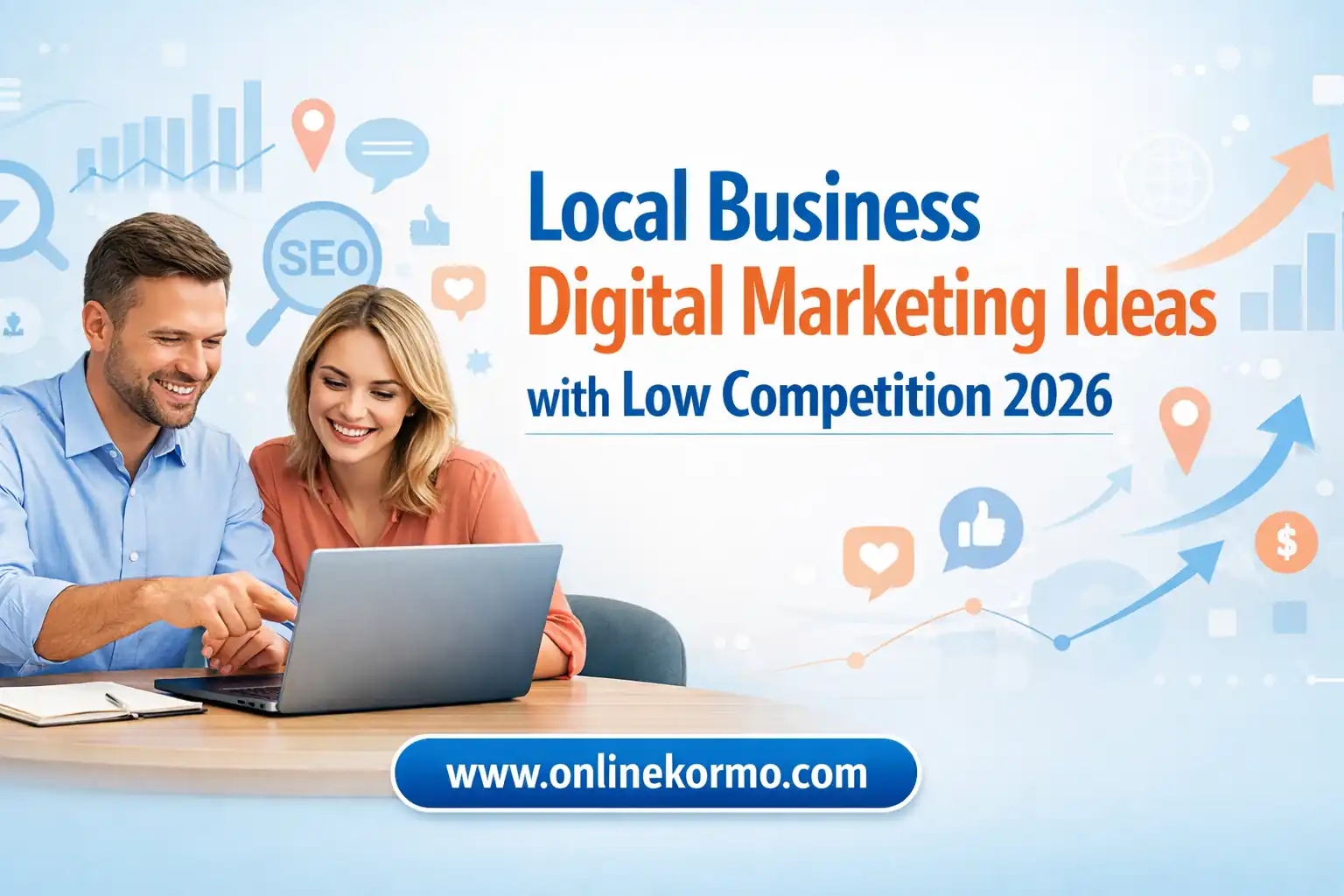

Local digital marketing in 2026 is all about visibility, relevance, and trust within a specific area. For small and local businesses, competing with big brands is no longer necessary. What matters most is showing up at the right time for the right local audience. With low-competition strategies, smart targeting, and consistent effort, local businesses can attract nearby customers without large budgets. In this guide, I’ll share practical local digital marketing ideas that focus on real customer intent, sustainable growth, and proven methods that work in 2026.
Table of Contents
1. Understanding Local Digital Marketing in 2026
2.Finding Low-Competition Opportunities for Local Businesses
3.Optimizing Google Business Profile for Local Visibility
4.Local SEO Strategies That Small Businesses Can Actually Win
5.Using Local Content Marketing to Attract Nearby Customers
6.Social Media Ideas That Work for Local Audiences
7.Low-Budget Paid Ads for Local Customer Acquisition
8.Tracking Local Marketing Performance and Scaling Growth
1. Understanding Local Digital Marketing in 2026
When I look at local digital marketing in 2026, I realize it’s no longer about competing with big brands it’s about dominating a small, specific area. Local marketing today focuses on intent-based searches, proximity, and trust signals. People want fast answers, nearby solutions, and businesses they can rely on. For me, understanding local digital marketing means knowing how search engines, maps, reviews, and localized content work together. In 2026, platforms prioritize relevance over size, which gives local businesses a real advantage. If I understand how local customers search and make decisions, I can win without fighting high competition.
local-focused strategies performed better than broad digital marketing efforts. When I shifted my mindset from “more traffic” to “right traffic,” results improved. Optimizing for local keywords, location-based content, and customer trust signals helped visibility grow steadily. I noticed that consistency mattered more than complexity. Local digital marketing rewarded simple actions done properly, not advanced tactics done poorly.
instead of targeting a competitive general keyword, I focused on a service + location keyword. I optimized a page with local intent, added genuine reviews, and published helpful local content. Within weeks, visibility improved and real inquiries followed. This proves that understanding local digital marketing in 2026 is the foundation for low-competition growth and long-term success for local businesses.
2. Finding Low-Competition Opportunities for Local Businesses
When I search for low-competition opportunities in local digital marketing in 2026, I don’t look for popular keywords—I look for ignored intent. Most local businesses try to rank for the same broad service terms, which creates unnecessary competition. Instead, I focus on specific services, neighborhoods, and customer problems that others overlook. Low-competition opportunities exist where search demand is clear but content is weak or outdated. By understanding how local customers search in real life, I can position my business where big competitors are not paying attention.
Digital marketing this details click now
narrowing my focus made local marketing easier and more effective. When I stopped targeting city-wide keywords and shifted to service-specific and area-specific terms, rankings became achievable. I also noticed faster conversions because visitors were already looking for exactly what I offered. This taught me that in local digital marketing, relevance always beats reach especially for small businesses.
instead of targeting “plumber in city,” I optimized content around “emergency bathroom pipe repair in [area].” Competition was low, intent was high, and results came quickly. Calls increased without increasing budget. This proves that finding low-competition opportunities is one of the smartest local digital marketing strategies in 2026.
3. Optimizing Google Business Profile for Local Visibility
When I focus on local digital marketing in 2026, optimizing my Google Business Profile becomes non-negotiable. For local businesses, this profile is often the first impression not the website. I treat it as a living asset, not a one-time setup. Accurate business information, relevant categories, service areas, and regular updates all signal trust to both users and search engines. In 2026, Google prioritizes profiles that stay active and helpful. If I optimize my Google Business Profile properly, I can increase local visibility without competing for highly saturated keywords.
I saw faster results from Google Business Profile optimization than from traditional SEO alone. Once I started updating photos, responding to reviews, and posting short updates, visibility improved noticeably. I didn’t need advanced techniques just consistency and accuracy. This showed me that local digital marketing often rewards businesses that simply do the basics better than others.
I optimized a local business profile by adding service-based descriptions, local keywords, and real customer photos. I also responded to every review professionally. Within a few weeks, the business started appearing more frequently in local map results and received more direct calls. This proves that optimizing Google Business Profile is a powerful, low-competition strategy for local visibility in 2026.
4. Local SEO Strategies That Small Businesses Can Actually Win
When I think about local SEO in 2026, I don’t see it as a technical challenge I see it as an opportunity. Small businesses can actually win because local SEO is more about relevance than authority. I focus on location-based keywords, service-specific pages, and clear on-page optimization. Search engines want to show the most helpful nearby result, not the biggest brand. By aligning my content with local search intent, I can compete in low-competition spaces that larger companies often ignore.
local SEO started working when I stopped copying generic SEO tactics. Creating separate pages for specific services and locations improved rankings faster than expected. I also noticed that simple changes like consistent NAP details and local schema made a real difference. This taught me that small businesses don’t need complex strategies; they need focused, accurate local SEO execution.
I created a dedicated service page optimized for a specific neighborhood and problem. I added local references, FAQs, and clear calls to action. Within a short time, that page ranked for low-competition local searches and generated steady inquiries. This proves that local SEO is one of the most achievable and effective digital marketing strategies for small businesses in 2026.
5. Using Local Content Marketing to Attract Nearby Customers
When I use local content marketing in 2026, I focus on relevance over reach. I’m not trying to attract everyone online I’m trying to attract the right people nearby. Local content works best when it answers location-specific questions, highlights local problems, and reflects community needs. Blog posts, local guides, FAQs, and service pages become powerful when they’re written with local intent. In digital marketing today, search engines and users both reward content that feels personal and geographically relevant.
local content consistently outperformed generic content. When I started writing about local issues, seasonal needs, and area-specific services, engagement improved. Visitors stayed longer, and inquiries felt more qualified. This showed me that people trust businesses that understand their local context. Local content marketing helped me build authority without competing in crowded niches.
instead of writing a general service article, I created a local guide addressing a common problem in a specific area. I included local references, practical tips, and clear solutions. That single piece attracted nearby customers searching for help and led to real inquiries. This proves that local content marketing is a low-competition, high-impact strategy for local businesses in 2026.
6. Social Media Ideas That Work for Local Audiences
When I use social media for local digital marketing in 2026, I stop thinking like a brand and start thinking like a neighbor. Local audiences don’t want polished ads they want familiarity, trust, and usefulness. I focus on sharing simple, relatable content that reflects local life, customer needs, and real experiences. Posting about services, behind-the-scenes moments, local updates, and helpful tips builds visibility without heavy promotion. In local marketing, consistency and authenticity matter more than follower count.
local engagement increased when I made content more community-focused. Posts that mentioned local areas, events, or customer stories performed better than generic marketing posts. People started recognizing the business and interacting naturally. This taught me that social media for local businesses is about connection, not competition.
I shared short posts answering common local customer questions and highlighted real customer experiences. I also engaged with nearby businesses and followers. Within a few months, social media became a steady source of local visibility and inquiries. This proves that simple social media ideas can deliver strong local marketing results in 2026.
7. Low-Budget Paid Ads for Local Customer Acquisition
When I run paid ads for local businesses in 2026, I keep everything simple and controlled. Local paid advertising doesn’t need big budgets it needs clear targeting. I focus on small daily budgets, limited locations, and high-intent keywords or audiences. Instead of promoting everything, I advertise one service to one local audience at a time. This approach reduces risk and increases relevance. In local digital marketing, precise targeting often outperforms expensive, broad campaigns.
low-budget ads worked best when I treated them as testing tools. Running small campaigns helped me understand which messages, offers, and locations performed well. I avoided unnecessary spending and used the data to improve organic strategies too. This showed me that paid ads, when used wisely, can support local growth without financial pressure.
I ran a small local search ad targeting a specific service and neighborhood. The ad led to a simple landing page with clear contact options. Within days, I received qualified inquiries without increasing the budget. This proves that low-budget paid ads can be an effective customer acquisition strategy for local businesses in 2026.
8. Tracking Local Marketing Performance and Scaling Growth
When I track local digital marketing performance in 2026, I focus on clarity, not complexity. For local businesses, success isn’t about massive traffic numbers it’s about calls, visits, and real customers. I track simple metrics like profile views, website clicks, direction requests, and inquiries. These insights help me understand what’s working locally and where to improve. By reviewing performance regularly, I can scale the strategies that bring real results and stop wasting effort on what doesn’t.
tracking data changed how I made decisions. Instead of guessing, I relied on performance trends to refine content, ads, and local SEO efforts. Small improvements like updating a page or adjusting targeting led to noticeable growth. This taught me that local digital marketing success comes from consistent optimization, not one-time actions.
I noticed a service page getting views but few calls. I improved the call-to-action, added local trust signals, and simplified contact options. Within weeks, conversions increased without additional traffic. This proves that tracking and scaling are essential for sustainable local business growth in 2026.