







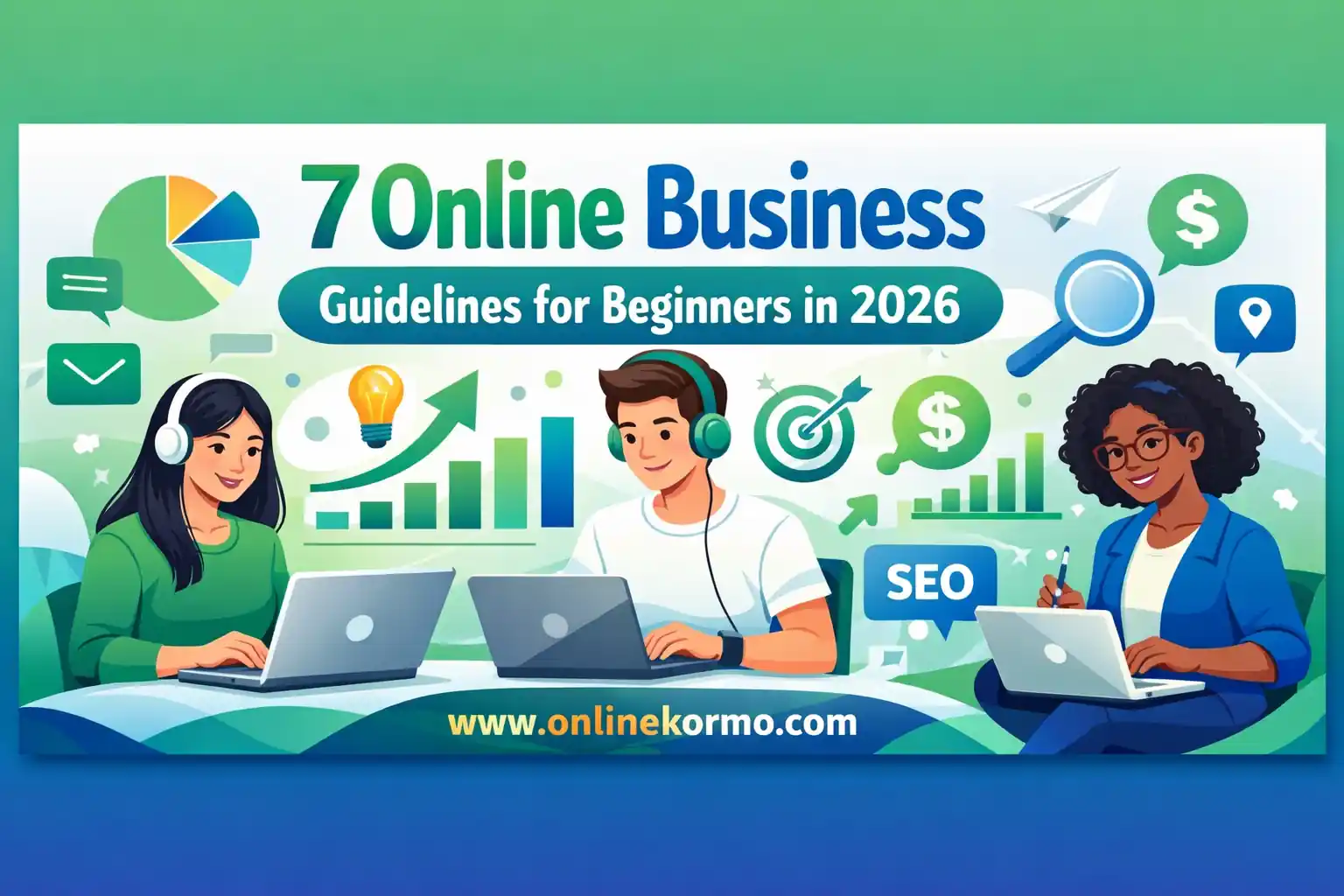

Starting an online business in 2026 is no longer a risky experiment — it’s becoming the new normal for entrepreneurs worldwide. Nearly 30% of businesses now operate online, and digital commerce continues to expand rapidly.
What makes this year different?
👉 Artificial intelligence tools are easier to use.
👉 Social commerce and mobile shopping are growing fast.
👉 U.S. audiences expect faster, smarter, and more personalized online experiences.
Global ecommerce revenue is projected to reach trillions, with mobile and AI-driven experiences reshaping how customers buy online.
If you’re a beginner, this guide will walk you through 7 proven online business guidelines — written in a practical, USA-style blog format — to help you build a sustainable and scalable digital brand.
Table of Contents
- 1.Choose a Problem-Solving Niche
- 2.Build a Trust-First Brand (E-E-A-T Strategy)
- 3.Focus on AI & Personalization Early
- 4.Create Value-Driven SEO Content
- 5.Optimize for Mobile & Social Commerce
- 6.Start Small but Automate Smart
- 7.Measure, Improve, and Scale
1️ Choose a Problem-Solving Niche — Not Just a Trend
Many beginners jump into online business because they see trending products or viral ideas. But successful U.S. entrepreneurs focus on solving real problems instead of chasing hype.
Why this matters in 2026
Online shoppers now expect brands to understand their needs deeply. Personalized experiences driven by AI are becoming standard, and niche businesses perform better because they connect with a specific audience.
Example
Instead of starting a “fitness blog,” you might create:
- 1.A remote-worker fitness brand
- 2.A beginner weight-loss coaching site
- 3.Or a productivity + wellness niche
👉 Real experience shows that niche clarity reduces competition and increases trust.
2️ Build a Trust-First Brand Using E-E-A-T Principles
Google’s modern algorithm focuses heavily on Experience, Expertise, Authority, and Trust (E-E-A-T) — especially for business content.
Beginner Mistake
Many new bloggers focus only on keywords. But in 2026, credibility matters more than ever.
Practical Tips
- 1.Share real experiences or case studies
- 2.Add statistics and references
- 3.Use clear author bios and transparency
Google increasingly rewards content that answers real questions and provides high-quality information.
Think of your blog like a digital business card — every article builds your authority.
3️ Use AI & Personalization to Compete With Big Brands
One of the biggest shifts in online business is the rise of AI tools.
In the U.S., over 33% of B2B ecommerce companies already use AI, while many others are actively exploring it.
Beginner-Friendly Ways to Use AI
- 1.Customer support chatbots
- 2.Content idea generation
- 3.Email personalization
- 4.Product recommendations
Story Example
A small online store owner used simple AI email segmentation to recommend products based on past purchases — conversion rates increased without increasing ad spend.
AI doesn’t replace creativity — it amplifies it.
4️.Value-First SEO Content (Google Discover Friendly)
If you want your blog to reach U.S. audiences through Google Discover or News Feed, your content needs to feel human, helpful, and timely.
What Works in 2026 SEO
- 1.Answer real questions directly
- 2.Use strong headlines and subheadings
- 3.Provide updated data and examples
- 4.Write in a conversational tone
Mobile-friendly design and easy readability also play a major role in rankings and Discover visibility.
Beginner Formula
Problem → Solution → Story → Action Step
Instead of writing generic advice, explain:
- 1.What went wrong
- 2.What you learned
- 3.How others can fix it
That’s the style most U.S. blogs follow today.
5️ Optimize for Mobile and Social Commerce Growth
Here’s a reality check: most customers won’t visit your website from a desktop anymore.
Click to learn more about earning online
Mobile commerce is expected to generate trillions in sales, and social platforms are turning into full shopping ecosystems.
Practical Tips
- 1.Keep paragraphs short
- 2.Use scroll-friendly formatting
- 3.Add shareable visuals or snippets
- 4.Think “TikTok or Instagram first” when planning content
Real-World Insight
Many beginners build beautiful websites but forget mobile experience — and lose traffic before users even read the first paragraph.
6️ Start Small, Validate Fast, and Automate Smart
You don’t need a big budget to start an online business anymore.
In fact, beginners who launch small projects and test ideas quickly often grow faster.
Smart Automation Ideas
- 1.Email autoresponders
- 2.Content scheduling tools
- 3.AI product descriptions
- 4.Customer onboarding flows
AI adoption is becoming a major growth catalyst for small businesses, improving efficiency and saving time.
👉 Think of automation as your first virtual employee.
Click to learn more about digital marketing
7️ Measure Data — Then Improve and Scale Strategically
Successful online entrepreneurs don’t guess — they measure.
Key Metrics Beginners Should Track
- 1.Traffic sources
- 2.Conversion rate
- 3.Email signup growth
- 4.Audience engagement
Average ecommerce conversion rates remain relatively low globally, meaning even small improvements can create big results.
Example Scenario
If your blog gets 1,000 visitors:
- 1.Improving conversion from 1% to 2% doubles revenue — without more traffic.
Scaling isn’t about working harder; it’s about working smarter with data.
Real Beginner Story (USA Market Example)
A beginner blogger in Texas started a simple remote-work productivity blog. Instead of chasing viral topics, they focused on one audience: freelancers working from home.
They used:
- 1.SEO articles answering specific questions
- 2.Email automation
- 3.AI tools for outlines
Within 12 months, they grew from zero traffic to a consistent affiliate income — simply by following structured online business guidelines like the ones in this guide.
Click here for more details about online business
❓ Frequently Asked Questions (FAQ)
Q1: What is the easiest online business for beginners in 2026?
Blogging, affiliate marketing, digital products, and niche ecommerce stores are among the easiest starting points because they require low upfront investment.
Q2: Do I need technical skills to start?
Not anymore. Modern website builders and AI tools make it possible to launch a professional online business without coding.
Q3: How long does it take to see results?
Most beginners start seeing consistent traffic within 3–6 months if they publish SEO-optimized, value-focused content regularly.
Q4: Is blogging still profitable in the USA market?
Yes. With growing ecommerce and content demand, blogs that provide expertise and solutions continue to perform well — especially in niche markets.
✅ Conclusion: Your 2026 Online Business Success Blueprint
Starting an online business in 2026 isn’t about luck — it’s about strategy.
If you remember only one thing from this guide, remember this:
👉 Focus on solving real problems.
👉 Build trust through valuable content.
👉 Use AI and data to scale faster.
Online commerce continues to expand globally, and beginners who start now have a huge advantage in building authority early.
You don’t need perfection — just consistent action and smart guidelines.
Call-To-Action (CTA)
Ready to start your online business journey?
👉 Pick ONE niche today, publish your first value-driven article, and commit to improving every week.