
Online Business Strategies for Long-Term Passive Income 2026
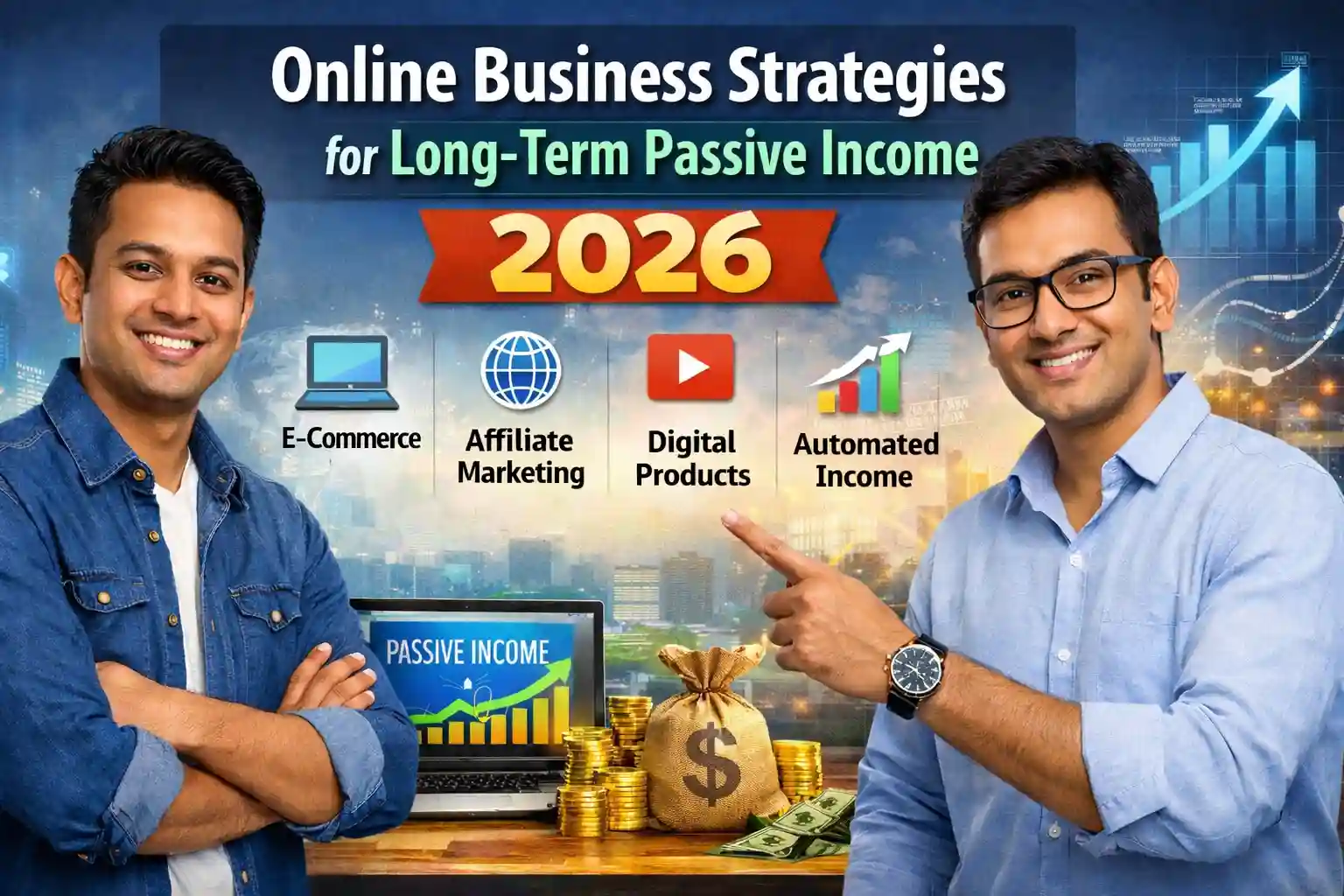
Building long-term passive income through online business is no longer a dream—it is a strategic process. In 2026, online business success depends on choosing the right models, building digital assets, and creating systems that work consistently over time. Instead of chasing quick profits, sustainable passive income comes from smart planning, automation, and value-driven strategies. With the right approach, online businesses can generate income even when active work is limited. Understanding these strategies is the first step toward creating financial freedom and long-term stability in the digital economy.
table of contents
1.Introduction to Long-Term Passive Income Through Online Business
2.Understanding Passive vs Active Online Income Models
3.Choosing the Right Online Business Model for 2026
4.Building Digital Assets That Generate Ongoing Income
5.Content and SEO Strategies for Sustainable Traffic
6.Automation Tools That Support Passive Income Growth
7.Monetization Methods for Long-Term Online Profit
8.Scaling Online Businesses Without Increasing Workload
9.Common Mistakes That Kill Passive Income Potential
1. Introduction to Long-Term Passive Income Through Online Business
I believe long-term passive income through online business is not about shortcuts it’s about building systems that work even when I’m not actively working. In 2026, online business opportunities have become more mature, competitive, and technology-driven. Passive income doesn’t mean zero effort; it means putting focused effort upfront to create digital assets that generate income over time. When I choose the right strategy such as content-based businesses, digital products, or automated services I can create consistent income streams that grow steadily. For me, the key is sustainability: building something that lasts, adapts, and continues to deliver value.
I’ve learned that chasing quick money online rarely works long term. Early on, I tried different online ideas without a clear strategy and saw inconsistent results. Things changed when I focused on one scalable model and committed to it. I noticed that once systems like content, SEO, and automation were set up properly, results started compounding. What surprised me most was how small daily actions—done consistently created long-term income without constant manual effort.
I worked with an online creator who built a simple niche website focused on solving one specific problem. Instead of promoting many products, the site focused on high-quality content and one monetization method. Over time, organic traffic grew, and income became predictable. Even when no new content was added for weeks, the website continued generating revenue. This is why online business strategies for long-term passive income in 2026 are about patience, focus, and building assets not chasing trends.
2. Understanding Passive vs Active Online Income Models
I’ve learned that not all online income is truly passive, even if it’s often marketed that way. In 2026, understanding the difference between passive and active online income models is critical before choosing any strategy. Active income requires my constant time and effort like freelancing, consulting, or one-to-one services. Passive income, on the other hand, is built by creating systems or digital assets that continue generating revenue with minimal daily involvement. When I understand this difference clearly, I can choose an online business model that fits my long-term lifestyle and income goals.
online business all details now click here
I initially focused too much on active income because it gave fast results. I was earning, but I felt stuck because the income stopped whenever I stopped working. That’s when I realized the limitation of active models. When I slowly started shifting toward semi-passive strategies like content and digital products I noticed a major change. Income became more stable, and pressure reduced because the system kept working even during breaks.
a freelancer I worked with earned well from client work but had no time freedom. I helped them add a passive layer by creating a niche-based digital product alongside their services. Over time, product sales started generating income without client dependency. Eventually, passive income covered a significant portion of monthly earnings. This shows why understanding passive vs active online income models is essential for building long-term passive income through online business in 2026.
3. Choosing the Right Online Business Model for 2026
I’ve realized that choosing the right online business model is the foundation of long-term passive income in 2026. Not every model is built for sustainability. Some look attractive in the short term but fail when competition increases or platforms change. When I choose a model, I focus on three things: scalability, automation, and long-term demand. Whether it’s content-based websites, digital products, affiliate marketing, or subscription models, the goal is to build something that can grow without depending entirely on my daily time. The right model aligns with my skills, market demand, and future trends.
onlinekormo all details click here
I’ve learned that switching business models too often slows progress. In the beginning, I jumped between ideas because I saw others making quick money. That approach only created confusion and burnout. Once I committed to one online business model and learned it deeply, results became more predictable. I understood how traffic, monetization, and systems worked together. The biggest lesson for me was that focus beats variety when building long-term passive income.
I worked with someone who wanted passive income but chose a model that required constant content creation with no system. Income stayed unstable. Later, they switched to a niche-focused content site combined with affiliate offers and automation tools. Over time, traffic became consistent, and income stabilized. Even without daily involvement, the business kept generating revenue. This proves that choosing the right online business model in 2026 is not about trends it’s about building a system designed for long-term growth and passive income.
4. Building Digital Assets That Generate Ongoing Income
I’ve learned that real passive income comes from owning digital assets, not just doing online work. In 2026, digital assets like websites, blogs, email lists, online courses, and digital tools are powerful because they keep generating income over time. When I build something I own, I’m not dependent on clients or hourly work. These assets continue working in the background, bringing traffic, leads, and sales. The key for me is focusing on value creating digital assets that solve specific problems and remain useful long-term.
I noticed a big shift when I stopped trading time for money and started building assets. Initially, building digital assets felt slow because results didn’t come instantly. But over time, things started compounding. A blog post written once continued to bring traffic and income months later. That experience changed my mindset I realized that patience and consistency are essential when building assets for ongoing income.
I worked with an online entrepreneur who created a simple niche website targeting a specific audience problem. Instead of chasing trends, they focused on evergreen content and one monetization strategy. Over time, the site grew into a steady income source. Even without daily updates, it continued generating revenue. This proves that building digital assets is one of the most reliable online business strategies for long-term passive income in 2026.
5. Content and SEO Strategies for Sustainable Traffic
I’ve realized that sustainable traffic is the backbone of long-term passive income in online business. In 2026, relying on short-term traffic sources is risky because algorithms and platforms change constantly. That’s why I focus on content and SEO strategies that bring consistent, organic visitors over time. When I create high-quality, search-focused content, it keeps attracting the right audience without ongoing promotion. SEO allows my content to work like a digital employee bringing traffic, leads, and income day after day.
I’ve seen that SEO is a long-term game, but it pays off massively. In the beginning, my content didn’t get much attention, which was frustrating. But as I stayed consistent and optimized for search intent, results slowly improved. After a few months, some pages started ranking and bringing traffic daily without extra effort. That’s when I understood the power of sustainable traffic it reduces dependency on ads and social platforms.
I worked with a niche website owner who depended heavily on social media traffic. When engagement dropped, income dropped too. I helped shift the focus to SEO-driven content targeting long-term keywords. Within months, organic traffic became the main source of visitors, and income stabilized. This shows why content and SEO strategies are essential for building sustainable traffic and long-term passive income through online business in 2026.
6. Automation Tools That Support Passive Income Growth
I’ve learned that automation is what truly turns an online business into a passive income system. In 2026, trying to manage everything manually limits growth and creates burnout. When I use automation tools for email marketing, content distribution, sales funnels, and customer follow-ups, my business can run smoothly with minimal daily involvement. Automation doesn’t remove control it gives me freedom. It allows systems to handle repetitive tasks while I focus on strategy, improvement, and scaling.
I noticed a major shift when I started automating small tasks. At first, I was hesitant, thinking automation was too technical. But once I set up simple email sequences and scheduling tools, everything became easier. Leads were followed up automatically, and sales happened even when I was offline. That experience showed me that automation isn’t about complexity it’s about smart setup.
I worked with an online course creator who manually replied to every inquiry and struggled to scale. I helped them automate email responses, onboarding, and content delivery. After automation, their workload dropped while sales increased. The system worked around the clock without constant effort. This proves that automation tools are essential for supporting passive income growth in online businesses in 2026.
7. Monetization Methods for Long-Term Online Profit
I’ve realized that choosing the right monetization method is just as important as building traffic in 2026. Long-term online profit doesn’t come from random income streams—it comes from monetization strategies that align with my audience and business model. Whether it’s affiliate marketing, digital products, subscriptions, or ads, the goal is sustainability. I focus on methods that generate recurring or repeat income rather than one-time earnings. When monetization is done correctly, it supports passive income without damaging user trust.
I’ve learned that over-monetizing can hurt long-term growth. Early on, I tried adding too many ads and offers, which reduced engagement and trust. Once I simplified my monetization and focused on one primary income source, results improved. Revenue became more predictable, and audience loyalty increased. That taught me an important lesson long-term profit comes from value-driven monetization, not aggressive selling.
I worked with a content creator who relied only on ad revenue, which fluctuated constantly. I helped them introduce a simple digital product related to their niche. Over time, product sales created a more stable income stream that supported ads rather than depending on them. This shows why smart monetization methods are critical for achieving long-term online profit and passive income in 2026.
8. Scaling Online Businesses Without Increasing Workload
I’ve learned that real growth in online business doesn’t mean working more hours—it means building smarter systems. In 2026, scaling without increasing workload is essential for maintaining passive income. When I focus on systems, processes, and leverage, my business can grow while my daily involvement stays minimal. Scaling is about optimizing what already works, not adding more complexity. By improving funnels, automation, and delegation, I can increase revenue without sacrificing freedom.
I used to think scaling meant doing more more content, more platforms, more effort. That mindset led to burnout. Things changed when I focused on refining existing systems instead of expanding endlessly. Small improvements in conversion rates and automation created bigger results than adding new tasks. I learned that efficiency is the real key to scalable online income.
I worked with an online business owner who created content daily but struggled to grow income. Instead of increasing output, I helped optimize their sales funnel and email automation. Without creating more content, revenue increased because the system converted better. This proves that scaling an online business in 2026 is about smarter systems not heavier workloads.
9. Common Mistakes That Kill Passive Income Potential
I’ve learned that most online businesses fail to generate passive income not because of lack of opportunity, but because of avoidable mistakes. In 2026, competition is higher, and small errors can slow growth or completely stop progress. One of the biggest mistakes I see is chasing shortcuts expecting fast results without building a strong foundation. Passive income requires patience, systems, and long-term thinking. When I ignore strategy, consistency, or audience needs, passive income potential slowly dies before it even has a chance to grow.
I’ve made several of these mistakes myself. At one point, I jumped between niches, tools, and strategies too often. Every time things started to gain momentum, I changed direction. That killed compounding growth. I also underestimated the importance of quality rushing content and monetization just to make quick money. Over time, I realized that passive income rewards focus, trust, and long-term value, not impatience.
I worked with an online business owner who depended heavily on one traffic source. When that platform changed its algorithm, traffic and income dropped overnight. Instead of diversifying early, they reacted too late. After rebuilding with SEO, email lists, and better systems, income slowly recovered. This shows why avoiding common mistakes like over-dependence, inconsistency, and short-term thinking is critical for protecting and growing long-term passive income through online business in 2026.
© সর্বস্বত্ব স্বত্বাধিকার সংরক্ষিত