









If you run a WordPress blog targeting a USA audience, SEO optimization isn’t optional anymore — it’s survival. With millions of websites competing for attention, Google now rewards sites that combine fast performance, strong structure, and authentic expertise.
Many bloggers believe installing a plugin like Yoast SEO or Rank Math is enough. But real optimization goes deeper — from site architecture to content clusters, internal linking, and mobile performance.
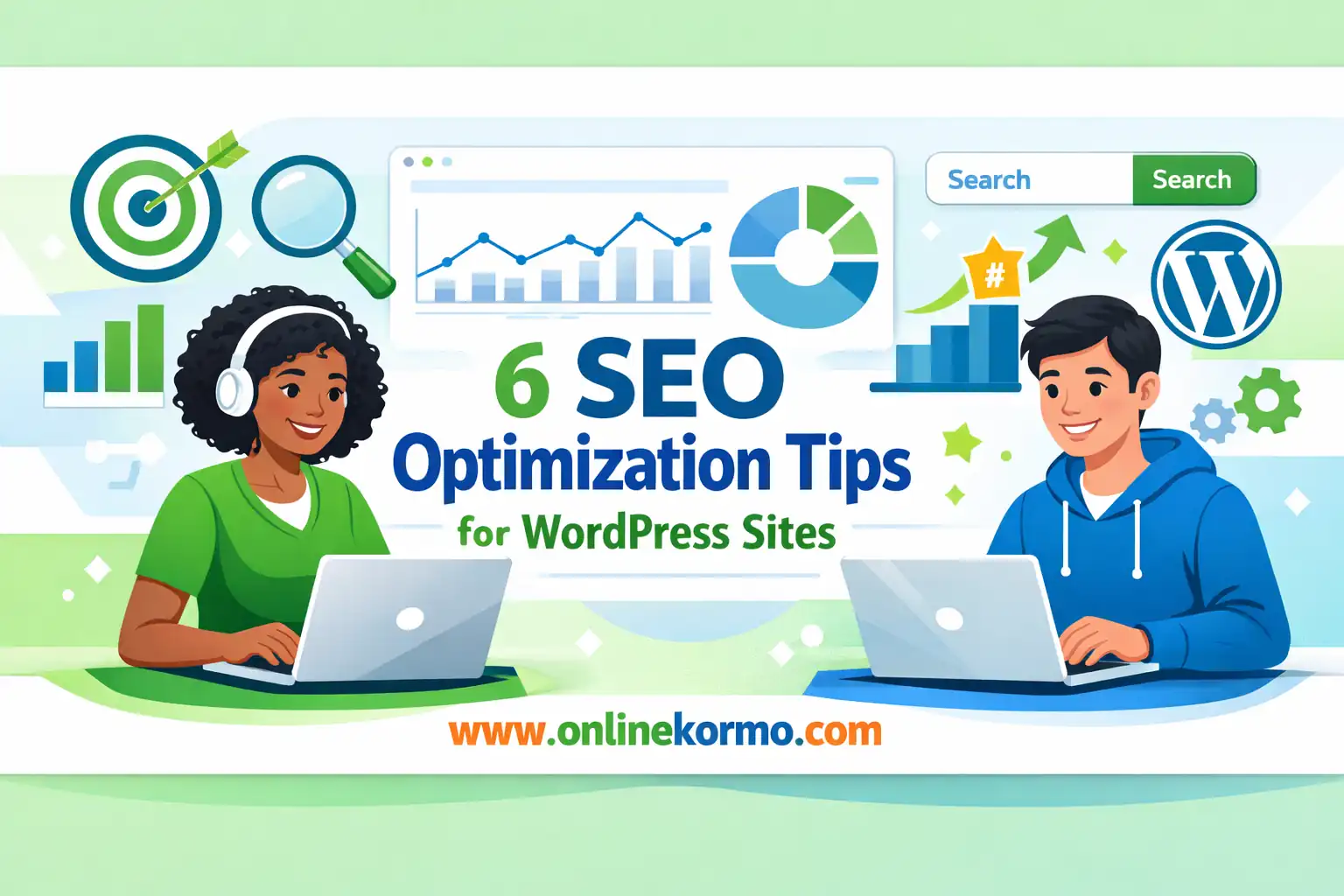
In this high-value authority guide, you’ll discover 6 proven SEO optimization tips for WordPress sites that modern bloggers use to increase traffic organically and appear in Google Discover feeds.
Whether you’re a beginner or an experienced creator, these strategies will help you build a sustainable SEO foundation that works long-term.
Table of Contents
- 1.Perform Smart Keyword Research & Topic Clustering
- 2.Optimize WordPress Site Structure and Permalinks
- 3.Improve Page Speed and Core Web Vitals
- 4.Master On-Page SEO Elements (Titles, Headers & Meta)
- 5.Build Strategic Internal Linking and Content Authority
- 6.Optimize Content for Google Discover and User Experience
1. Perform Smart Keyword Research & Topic Clustering
SEO success always starts with understanding search intent. Instead of targeting random keywords, modern WordPress SEO focuses on topic clusters.
Keyword research helps you discover what users actually search for and allows you to structure content around those interests. Long-tail keywords and semantic variations help Google understand your topic more deeply.
Why Topic Clusters Matter
Imagine your main keyword is “WordPress SEO.” Instead of publishing one article, you create multiple supporting posts like:
- 1.WordPress Speed Optimization
- 2.Best SEO Plugins
- 3.Fixing Crawl Errors
These supporting posts link back to your main pillar article, creating authority signals that improve rankings.
Real Example
A USA blogging site published a pillar guide on WordPress SEO and added 10 related sub-topics. Within months, the site gained more internal traffic because Google understood the topic depth.
Pro Tip:
Use tools like Google suggestions, “People Also Ask,” and competitor analysis to find related keywords.
2. Optimize WordPress Site Structure and Permalinks
Your website’s structure directly affects how search engines crawl and index your pages.
A clean permalink like:
yourdomain.com/seo-optimization-tips-wordpress
is far more effective than:
yourdomain.com/?p=123
SEO-friendly URLs should be short, descriptive, and keyword-focused.
Best Practices for WordPress Structure
- 1.Use category hierarchy logically.
- 2.Avoid duplicate tags and categories.
- 3.Fix broken links regularly.
- 4.Keep important pages within 2–3 clicks from the homepage.
Organized navigation helps both readers and search engines understand your content better.
Real Experience Insight
Many USA bloggers notice that simply changing permalinks and cleaning categories improves crawl efficiency — especially on larger blogs with hundreds of posts.
3. Improve Page Speed and Core Web Vitals
Page speed is one of the strongest ranking factors in modern SEO. A slow WordPress site increases bounce rate and lowers engagement signals.
Core Web Vitals measure:
- 1.Largest Contentful Paint (LCP)
- 2.First Input Delay (FID)
- 3.Cumulative Layout Shift (CLS)
Optimizing these metrics improves rankings and user experience.
How to Speed Up WordPress
- 1.Use a lightweight theme like GeneratePress.
- 2.Convert images to WebP format.
- 3.Enable lazy loading.
- 4.Use a CDN for USA audiences.
Image optimization alone can reduce page load size by up to 25–34%, which significantly improves performance.
Example
A lifestyle blogger reduced load time from 5 seconds to 2 seconds using caching and image compression — resulting in longer session duration and higher Google Discover impressions.
4. Master On-Page SEO Elements (Titles, Headers & Meta)
On-page SEO tells Google exactly what your content is about. Without proper structure, even great content may struggle to rank.
Key On-Page Elements
Title Tag:
Use your main keyword naturally.
Meta Description:
Although not a direct ranking factor, it increases click-through rate when written well.
Header Structure:
Use only one H1 and organize content with H2 and H3 headings to improve readability and semantic clarity.
Example Structure
H1 – 6 SEO Optimization Tips for WordPress Sites
H2 – Keyword Research
H2 – Site Structure
H3 – Permalink Optimization
This hierarchy helps search engines understand the flow of information.
Click to learn more about earning online
5. Build Strategic Internal Linking and Content Authority
Internal links are like pathways connecting your content. They help distribute authority across your site and guide readers toward relevant articles.
Modern SEO strategies recommend creating pillar pages connected with multiple supporting articles.
How to Use Internal Links Properly
- 1.Add contextual links every few paragraphs.
- 2.Use descriptive anchor text.
- 3.Link new posts to older high-authority pages.
Real Blogging Scenario
A USA tech blog added internal links between related tutorials and saw improved rankings for multiple keywords — even without building new backlinks.
This works because Google understands topical relevance better when pages are connected logically.
6. Optimize Content for Google Discover and User Experience
Google Discover prioritizes content that feels authentic, informative, and visually engaging.
Click to learn more about digital marketing
To increase Discover visibility:
- 1.Write conversational, helpful content.
- 2.Add FAQs and clear answers.
- 3.Use updated timestamps and author credibility.
- 4.Include high-quality images.
Google also evaluates Experience, Expertise, Authority, and Trust (E-E-A-T), meaning real knowledge and transparency matter more than ever.
Discover-Friendly Writing Style
Instead of keyword stuffing, focus on storytelling and real examples. Content that feels useful and human-written often performs better in USA markets.
Conclusion
SEO optimization for WordPress sites is no longer about tricks — it’s about building a complete ecosystem.
By focusing on:
- 1.Smart keyword clustering
- 2.Clean site structure
- 3.Faster performance
- 4.Strong on-page SEO
- 5.Strategic internal linking
- 6.Discover-ready content
you create a powerful foundation that drives organic traffic for years.
If you consistently apply these six tips, your WordPress blog won’t just rank — it will grow into a trusted authority site in the competitive USA blogging landscape.
Click here for more details about online business
FAQ Section
1. How long does WordPress SEO take to show results?
Most blogs start seeing measurable improvements within 3–6 months if optimization is consistent.
2. Which SEO plugin is best for WordPress?
Yoast SEO and Rank Math are popular choices because they simplify meta tags, schema, and technical settings.
3. Do meta descriptions help rankings?
They mainly improve click-through rate rather than direct ranking signals, but higher CTR can indirectly boost performance.
4. Is speed really that important for SEO?
Yes. Faster websites provide better user experience and often rank higher because of improved engagement metrics.
5. How often should I update my blog content?
Updating important posts every few months helps maintain freshness signals and improves long-term visibility.